
Introduction
If Victorian skirting dominates traditional interiors, Ogee probably comes closest to being the industry's all-rounder.
It has been a staple profile for decades and continues to appear on everything from speculative housing developments and renovation projects to bespoke residential builds.
Its success isn't driven by trends. Instead, Ogee occupies a middle ground that appeals to both traditional and modern tastes, making it one of the safest choices for developers, contractors and homeowners alike.

Understanding the Appeal of Ogee
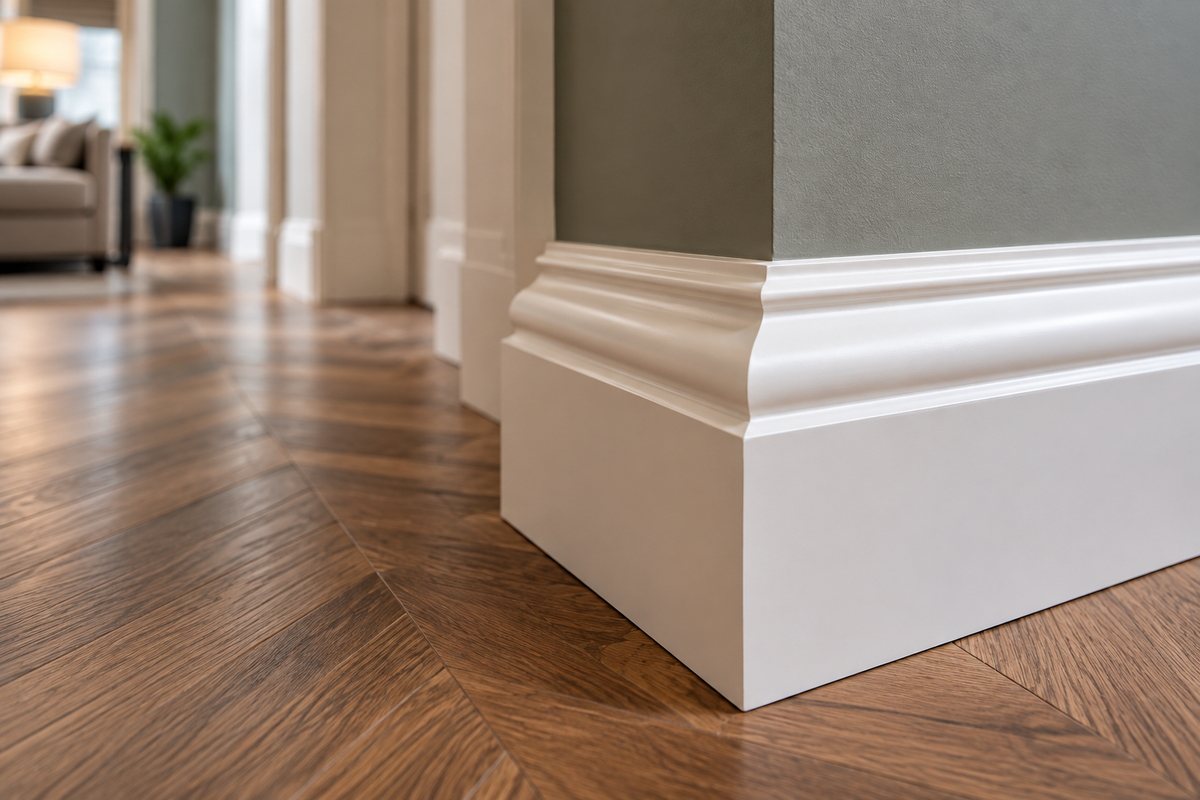
The profile's distinctive flowing curve provides visual detail without becoming overly decorative.
That's a major advantage when specifying products across multiple property types. Unlike highly ornate mouldings that suit only certain interiors, Ogee adapts comfortably to changing design preferences.
Different interpretations of the profile also make it possible to choose subtle variations, such as the Ogee 1 MDF skirting board, while retaining the characteristic curved detailing of the Ogee style.
For developers, this flexibility reduces risk. For installers, it simplifies specification decisions. For homeowners, it creates a finished appearance that rarely feels outdated.
Why Trade Professionals Continue to Specify Ogee
Trade customers often prioritise practicality over design trends.
An ideal skirting profile needs to satisfy architects, installers, decorators and end users simultaneously. Ogee consistently achieves that balance.
The profile is decorative enough to add interest but restrained enough to work within contemporary interiors. This broad acceptance helps explain why Ogee remains one of the most widely specified profiles within the UK market.
MDF and Production Consistency
Profile quality becomes increasingly important as production volumes increase.
With MDF, manufacturers can achieve consistent machining across entire production runs, helping installers maintain visual continuity throughout a project. This consistency is one of the practical advantages of choosing an Ogee MDF skirting board for residential and trade applications.

Consistency matters.
Even slight profile variations become obvious when boards are installed side by side, particularly in larger properties where long wall runs draw attention to finishing details.
Installation Considerations
From an installation perspective, Ogee remains relatively straightforward to work with.

The profile machines cleanly, joins effectively and accommodates a wide range of room configurations. Because the detailing is concentrated towards the upper section of the board, installers often find that minor wall irregularities become less noticeable once decoration is complete.
This practical advantage contributes to the profile's ongoing popularity among experienced tradespeople.
Choosing Appropriate Heights
As with any skirting profile, proportion should drive specification decisions.
A common mistake is treating profile selection and board height as separate considerations. In reality, the two work together.
Larger rooms generally benefit from taller boards, while smaller spaces often achieve better balance with more moderate dimensions. Where a more substantial profile is required, a large Ogee MDF skirting board can create greater visual presence within a larger room. Successful specifications consider the overall scale of the room rather than focusing solely on the profile itself.

Long-Term Market Demand
Unlike niche mouldings that rise and fall in popularity, Ogee has maintained demand across multiple decades.
The profile's ability to complement changing interior styles has protected it from becoming associated with a specific design era. This adaptability continues to make it a reliable option for manufacturers, merchants and trade customers.
Conclusion
Ogee remains one of the industry's most dependable skirting profiles.
Its combination of visual appeal, broad compatibility and manufacturing consistency explains why it continues to feature across residential projects of every scale. For professionals seeking a profile with proven market acceptance, Ogee remains a specification that rarely disappoints.