
Introduction
Some skirting board profiles come and go with interior trends. Victorian isn't one of them.
Despite the growing popularity of minimalist interiors, Victorian skirting remains one of the most frequently specified profiles across residential projects throughout the UK. From period renovations and listed properties to modern developments looking to introduce more architectural detail, demand for the profile has remained remarkably consistent.
From a manufacturing perspective, that popularity isn't difficult to understand. Victorian skirting offers enough detail to create a decorative finish without becoming overly ornate, making it suitable for a wide range of property styles and room sizes.
For joiners, builders and developers, it's often the safest recommendation when clients want something traditional that will still look relevant years from now.

Why Victorian Profiles Continue to Perform
Unlike some decorative mouldings that suit only specific architectural styles, Victorian skirting has broad appeal.
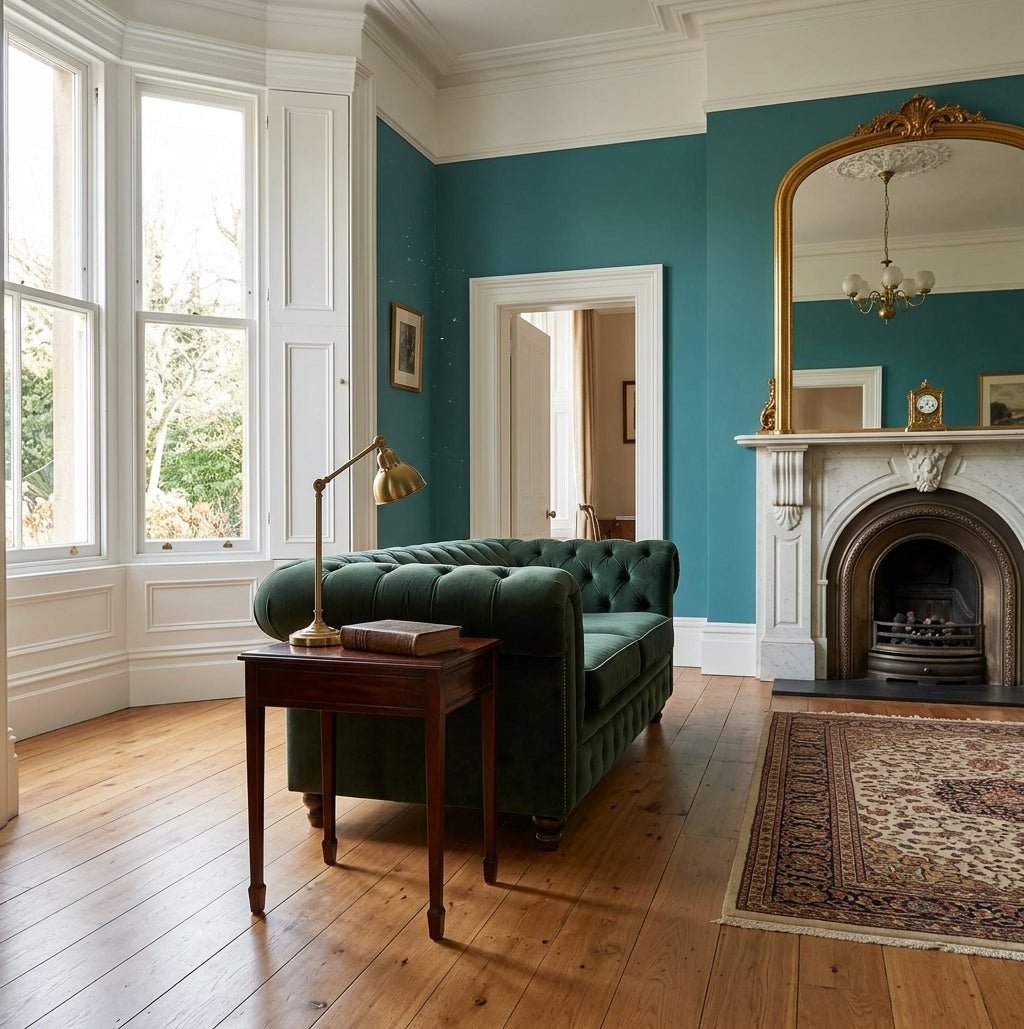
On renovation projects, it complements original features such as sash windows, ceiling roses and traditional architraves. On newer developments, it introduces character that modern interiors often lack.
Many trade customers specify Victorian profiles because they rarely generate objections from homeowners. The design feels familiar, established and proportionate, making it an easy decision during the finishing stages of a project.
MDF Has Changed the Market
Years ago, Victorian skirting was almost exclusively associated with softwood and hardwood products. Today, MDF accounts for a significant proportion of demand, particularly where painted finishes are required.
The reasons are practical.
High-quality MDF provides consistency throughout production runs, allowing profiles to remain uniform from board to board. Installers don't need to work around knots, grain variation or resin pockets, while decorators benefit from a smoother painting surface.
For larger projects where consistency is critical, MDF often provides advantages that natural timber cannot always guarantee.
Profile Height Matters More Than Profile Choice
One of the most common specification mistakes isn't choosing the wrong profile. It's choosing the wrong height.
Victorian mouldings rely on proportion. A profile that looks balanced at 170mm may appear completely different at 95mm. Equally, excessively tall boards can dominate smaller rooms and make interiors feel out of scale.
For trade professionals, understanding room proportions is often more important than selecting between decorative profiles.
Ceiling height, door sizes and room dimensions should always influence skirting specifications rather than relying on standard sizes across an entire development.

Matching Skirting and Architrave
Consistency remains one of the most important factors in interior finishing.
While mixed moulding styles occasionally work, matching Victorian skirting with Victorian architrave generally produces the strongest visual result. The repetition of profile details creates continuity throughout a property and contributes to a more considered finish.
This becomes particularly noticeable in hallways, staircases and open-plan spaces where multiple joinery elements are visible at the same time.

Manufacturing Considerations
Producing a clean Victorian profile requires attention to tooling quality and machining consistency.
Even minor deviations become noticeable once boards are installed alongside one another. Sharp detailing, accurate profile reproduction and smooth machining all contribute to installation efficiency and final appearance.
For manufacturers, maintaining profile consistency across production batches is essential, particularly when supplying larger developments where additional material may be ordered months after initial installation.
Why Demand Shows No Sign of Slowing
Interior design trends continue to evolve, yet Victorian skirting remains one of the most requested profiles in the market.
Part of its longevity comes from familiarity. Homeowners recognise the design, architects continue specifying it, and tradespeople know it delivers reliable results across a broad range of projects.
When viewed from a manufacturing perspective, Victorian skirting represents a profile that has successfully adapted to modern materials while retaining the characteristics that made it popular in the first place.
Conclusion
Few profiles offer the same combination of versatility, recognisability and long-term appeal as Victorian skirting.
For trade professionals, it remains a dependable specification. For manufacturers, it continues to be one of the industry's most important moulding profiles. And for homeowners, it delivers a level of character and detail that many contemporary interiors still struggle to replicate.